How Does the Resistor Symbol Work?
I. Introduction
In the world of electrical engineering, resistors play a crucial role in controlling the flow of electric current. A resistor is a passive electrical component that provides resistance to the flow of current, allowing engineers to manage voltage levels and current flow in circuits. Understanding the resistor symbol is essential for anyone involved in designing or analyzing electrical circuits. This article aims to explain the resistor symbol, its significance in circuit diagrams, and how it facilitates communication among engineers and technicians.
II. Understanding Resistors
A. What is a Resistor?
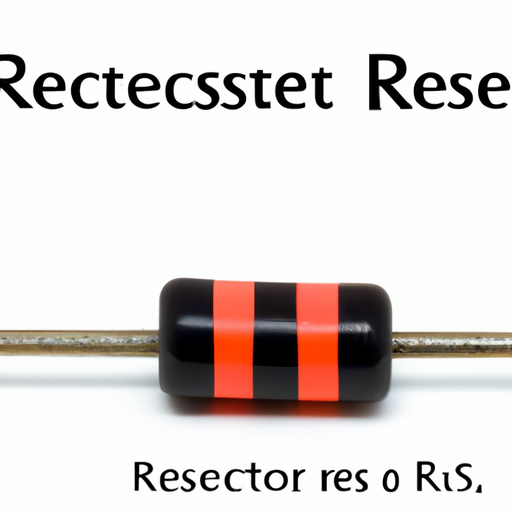
At its core, a resistor is a device that limits the flow of electric current in a circuit. By providing resistance, it helps to control the voltage and current levels, ensuring that components operate within their specified limits. Resistors come in various types, including fixed resistors, which have a constant resistance value, and variable resistors, such as potentiometers, which allow for adjustable resistance.
B. Basic Principles of Resistance
The behavior of resistors is governed by Ohm's Law, which states that the current (I) flowing through a conductor between two points is directly proportional to the voltage (V) across the two points and inversely proportional to the resistance (R) of the conductor. This relationship can be expressed with the formula:
\[ V = I \times R \]
Resistance is measured in ohms (Ω), a unit named after the German physicist Georg Simon Ohm. Understanding these basic principles is essential for interpreting circuit diagrams and analyzing circuit behavior.
III. The Resistor Symbol in Circuit Diagrams
A. Overview of Circuit Diagrams
Circuit diagrams are graphical representations of electrical circuits, using standardized symbols to depict various components. These symbols are crucial for effective communication in electrical engineering, allowing engineers and technicians to understand complex circuits at a glance. Standardization of symbols, such as those defined by the International Electrotechnical Commission (IEC) and the American National Standards Institute (ANSI), ensures consistency across different diagrams and applications.
B. The Resistor Symbol
The resistor symbol is typically represented as a zigzag line in most circuit diagrams. This symbol visually conveys the concept of resistance, with the zigzag pattern indicating the opposition to current flow. In some cases, especially in more complex diagrams, the resistor may be represented as a rectangle. Variations in the symbol can also indicate different types of resistors, such as variable resistors or potentiometers, which may be depicted with an arrow across the symbol to indicate adjustability.
C. Placement and Orientation in Circuit Diagrams
Reading a circuit diagram involves understanding the placement and orientation of symbols in context. The resistor symbol is usually placed in line with the current flow, and its orientation can indicate the direction of current. Correct placement is vital for accurately interpreting the circuit's function and behavior. For instance, in a series circuit, resistors are connected end-to-end, while in a parallel circuit, they are connected across the same two points.
IV. Significance of the Resistor Symbol
A. Communication in Engineering
The resistor symbol, like all symbols in circuit diagrams, serves as a universal language for engineers and technicians. These symbols convey essential information about the components and their relationships within a circuit. By using standardized symbols, engineers can effectively communicate complex ideas and designs without the need for lengthy explanations.
B. Role in Circuit Analysis
Understanding the resistor symbol is crucial for analyzing circuit behavior. Engineers use the symbol to identify resistors in a circuit, allowing them to calculate total resistance in series and parallel configurations. In a series circuit, the total resistance is simply the sum of the individual resistances:
\[ R_{total} = R_1 + R_2 + R_3 + \ldots \]
In a parallel circuit, the total resistance can be calculated using the formula:
\[ \frac{1}{R_{total}} = \frac{1}{R_1} + \frac{1}{R_2} + \frac{1}{R_3} + \ldots \]
These calculations are essential for designing circuits that function correctly and safely.
V. Practical Applications of Resistor Symbols
A. Examples of Circuit Diagrams Featuring Resistors
Resistor symbols are prevalent in various circuit diagrams, from simple to complex. For instance, in a basic LED circuit, a resistor is used to limit the current flowing through the LED, preventing it from burning out. The circuit diagram for this setup would include the resistor symbol in series with the LED symbol, clearly indicating the relationship between the two components.
In more complex circuits, such as amplifiers or filters, multiple resistors may be used in various configurations. Understanding the resistor symbols in these diagrams is crucial for engineers to analyze the circuit's behavior and ensure it meets design specifications.
B. Importance in Troubleshooting and Repair
When troubleshooting malfunctioning circuits, the ability to identify components using their symbols is invaluable. Engineers and technicians rely on circuit diagrams to locate resistors and other components, allowing them to diagnose issues effectively. The resistor symbol serves as a quick reference, enabling efficient communication among team members and facilitating the repair process.
VI. Common Misconceptions about Resistor Symbols
A. Misinterpretation of the Symbol
One common misconception about the resistor symbol is that it can be easily confused with other components. For example, the zigzag symbol may be mistaken for the symbol for inductors or capacitors, especially for those new to reading circuit diagrams. Understanding the context and the specific characteristics of each component is essential for accurate interpretation.
B. Confusion with Other Components
Another misconception is that all resistors are represented by the same symbol. While the zigzag line is the most common representation, variations exist for different types of resistors. Recognizing these variations is crucial for understanding the specific function of each component in a circuit.
C. Importance of Context in Understanding Symbols
The context in which a symbol appears is vital for accurate interpretation. For instance, the same resistor symbol may have different implications depending on its placement within a circuit. Understanding the overall circuit design and the relationships between components is essential for making sense of the symbols used.
VII. Conclusion
In conclusion, the resistor symbol is a fundamental element of circuit diagrams, playing a crucial role in electrical engineering. It serves as a universal language that facilitates communication among engineers and technicians, allowing for effective analysis and design of circuits. By understanding the significance of the resistor symbol, individuals can enhance their knowledge of electrical circuits and improve their skills in circuit design and troubleshooting.
As technology continues to evolve, the importance of symbols in electrical engineering will only grow. For those interested in pursuing a career in this field, a solid understanding of circuit symbols, including the resistor symbol, is essential. We encourage further study in electrical engineering, as mastering these concepts will pave the way for success in designing and analyzing complex electrical systems.
VIII. References
For those looking to delve deeper into the world of electrical engineering and circuit design, the following resources are recommended:
1. "The Art of Electronics" by Paul Horowitz and Winfield Hill
2. "Electrical Engineering: Principles and Applications" by Allan R. Hambley
3. Online resources such as the IEEE Xplore Digital Library and educational websites like Khan Academy and Coursera.
By exploring these materials, readers can gain a more comprehensive understanding of resistors, circuit diagrams, and the broader field of electrical engineering.


